

 English
 中文简体
中文简体
 Español


Why Square Tube Roll Up Camping Tables Feel More Stable?
Posted by Admin
The Roll-Up Format and How It Works
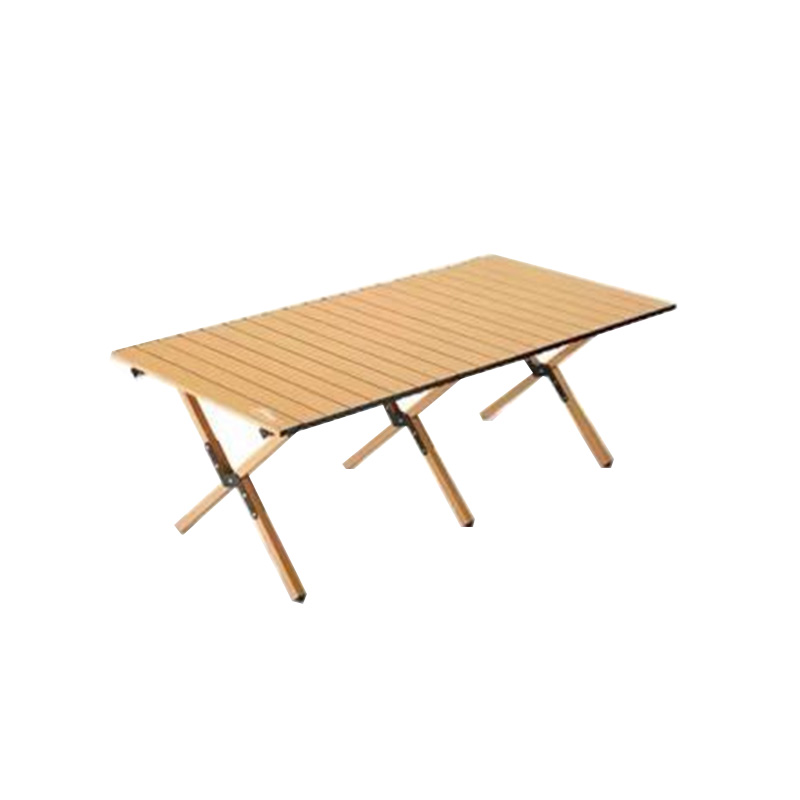
Roll up camping tables use a tabletop made from individual slats — typically aluminum, hardwood, or bamboo composite — connected by a flexible backing material, usually heavy-duty fabric or webbing. The slats run parallel to each other, and the whole surface rolls or folds for transport rather than folding as a rigid panel.
The advantage is pack size. A roll-up table breaks down into a cylinder or a flat roll that fits into a compact carry bag, often no wider than the table itself and shorter than the leg length. For campers who pack into a vehicle with limited cargo space, or who carry gear on a motorcycle or in a trailer with fixed compartments, that compact footprint is a meaningful practical benefit compared to a rigid-top folding table that stays roughly the same size no matter how it folds.
Setup is straightforward: unroll the top, connect or unfold the square tube frame, lock the legs into position. Most square tube roll up camping tables are designed to be assembled by one person without tools in under two minutes. That speed matters when you're setting up camp in fading light or in rain.
Square tube frames resist the torsional flex that round tube frames can develop at joints over time — which is why a square tube roll up camping table tends to feel noticeably more rigid under a loaded camp kitchen setup than its round-tube equivalent at the same weight class.
Materials: What the Frame and Top Are Usually Made From
Aluminum is the dominant frame material in square tube roll up camping tables, and the reasons are straightforward. It's light relative to its structural contribution, doesn't rust, and machines into square profiles without difficulty. The wall thickness of the tubing — typically between 1.2mm and 2mm in camping table applications — affects both weight and rigidity. Thicker walls mean a stiffer, heavier table. Thinner walls save weight but can flex under heavy loads or feel less planted on irregular ground.
Steel square tube appears in heavier-duty camp table designs where load capacity is prioritized over portability — tailgate setups, base camp kitchens, overlanding rigs where the table rides in a vehicle rather than being carried by hand. Steel frames handle higher static loads without the tube walls deforming, but the weight penalty is significant enough that backpacking and light camping applications stay with aluminum.
For the tabletop slats, aluminum offers a clean, wipe-down surface with no real absorption — useful when the table doubles as a food prep surface. Hardwood slats — teak and acacia are common choices — have a warmer aesthetic and feel more substantial underfoot if the table also serves as a step. Bamboo composite sits between the two: lighter than hardwood, more texture than aluminum, and stable enough to handle moderate moisture without warping.
Who Actually Uses These Tables
Square tube roll up camping tables show up across a wide range of outdoor activities, which is part of why the category has grown. Vehicle-based campers use them as dedicated kitchen prep surfaces. Festival-goers appreciate the compact pack size when space in a car boot is contested. Overlanders mount them to tailgates or rooftop tent platforms. Picnickers use them for day outings where carrying a rigid folding table isn't practical.
The common thread is that the user needs a stable, flat surface in a location where one doesn't exist, and needs to get it there and set it up without a lot of effort. Square tube roll up camping tables solve that specific problem in a way that's harder to argue with once you've used one — the frame stays rigid, the top rolls down to almost nothing, and the whole thing is ready in the time it takes to boil water for the cup of coffee.
Contact Us Now


Copyright@ 2024 Zhejiang Yayi Industry & Trade Co., Ltd. All Rights Reserved.

Outdoor Camping Products Factory